Echo New York: A Century of Scarf Design
The Echo story began as a love story. Edgar and Theresa Hyman started their scarf business on their wedding day in the fall of 1923, and it was Theresa who chose the name, pairing Edgar’s initials, E.C.H., with the O from “company.” Echo Scarfs was born, and so was a romance with print, pattern, and color that has never faded.
Early on, the Hymans began printing the Echo name right into their designs, a gentle nudge to the printers to treat every piece with special care. Over the decades, that small signature has grown into a seal of quality recognized around the world.
A century later, Echo New York is led by the third and fourth generations of the family and is still designed just a block from that first showroom. Our world has grown to include cold weather accessories, beachwear, and more, yet the scarf remains our first love, and it’s still at the heart of everything we make.
What Echo Makes
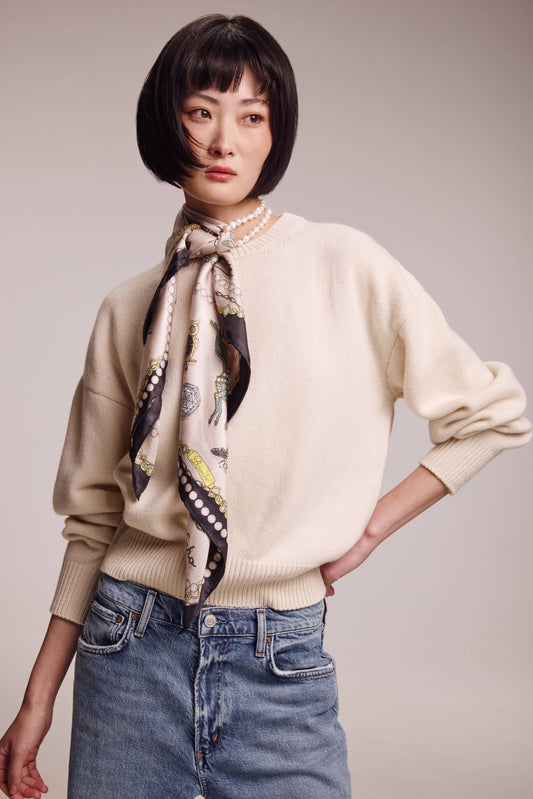
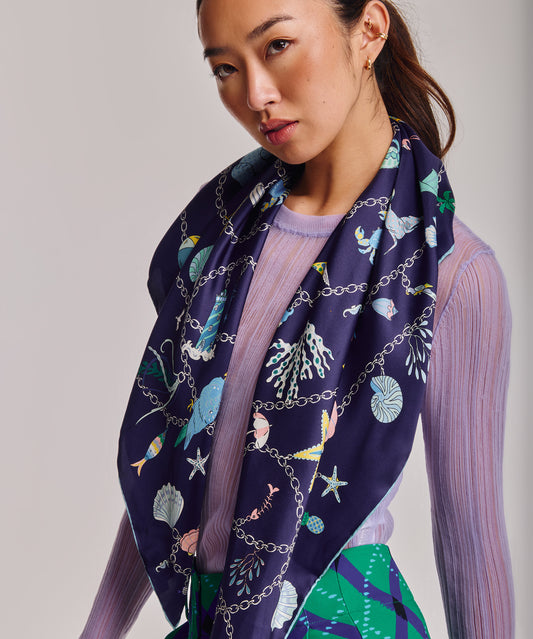
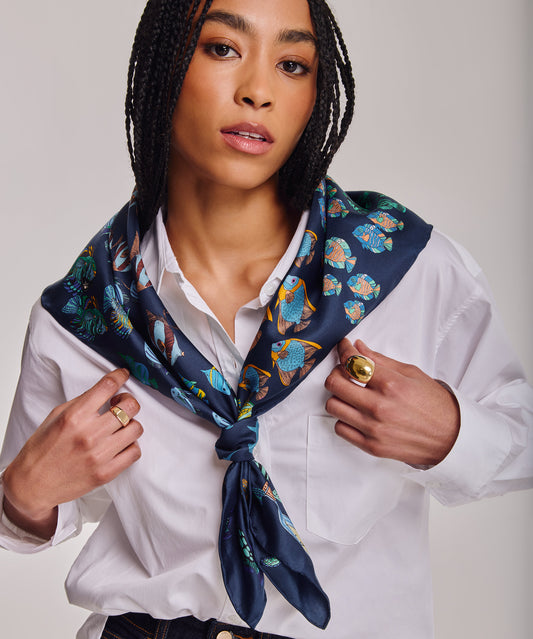
The Echo scarf comes in more shapes than most people expect: classic silk squares, small bandanas, long oblongs, slim ribbons, and generous wraps. Around those Echo scarves, the brand has grown into a full wardrobe of accessories.
- Scarves and wraps: printed silk squares, oblongs, bandanas, and wraps and shawls for every season
- Cold weather: hats, ponchos, ruanas, and gloves, including Echo Touch styles that work with touchscreens
- Beach: cover-ups, caftans, and sarongs, plus sun hats and beach bags
Where Echo Is Designed
Every Echo collection starts in our New York design studio, where in-house designers and artists draw new prints and revisit old ones. Their reference library is the Echo archive: a century of florals, stripes, paisleys, and geometrics. Sometimes an archive print returns in a new colorway; sometimes, as with Your Future Vintage, an original from the 1950s, 60s, or 70s returns in its first size.
Echo New York designers have always looked outward, too. Echo was bringing in fabrics from overseas back in the 1930s, earlier than most scarf makers, and the brand still brings ideas from around the world, interpreting them through a unique New York City lens.
The one collection designed outside our studio is Echo100, our centennial project, for which 100 guest creators were asked to design a silk square of their own. Each design is a numbered run of 100, and each sale sends $100 to a cause the creator picked.
Echo Design Group: Beyond Our Own Label
Echo Design Group, the company behind Echo New York, has also designed for others since the 1970s. Its private label team creates custom accessories and home goods for brands, retailers, and museums, from Coach and Brooks Brothers to The Metropolitan Museum of Art and MoMA.
You'll also find the Echo brand in leading department stores and specialty boutiques. Retailers interested in carrying Echo can learn more on our wholesale page.
Who We Design For
Echo has always been for women who wear what they love, their own way: a bold print over a classic coat, a bandana knotted at a crisp collar, a scarf that says something about the day ahead. More than a century after the first Echo Scarfs design, that's still who we have in mind every time a new print leaves the studio.

1923
One Day, Two Promises
On September 27, 1923, Edgar and Theresa Hyman were married. On that very day, they also launched a family business specializing in scarfs. They used the acronym of Edgar’s initials and the "O" from "company" to form its name: ECHO.
By 1929, Echo had established itself successfully in the marketplace, enabling the company to survive the Great Depression.

1930s
A LEADER EMERGES
The Echo brand began our long, iconic journey after Theresa Hyman requested the logo be printed on every scarf design. This was to distinguish Echo products from the competition and assure everyone — from production to purchase — that each scarf was created with the utmost quality and care.
Throughout the decade, the pioneering Echo became one of the earliest scarf companies to import fabrics from abroad.

1940s
Doing Our Part
During the upheaval years of WWII, Echo was the most prominent and prolific manufacturer of women’s patriotic scarfs. Echo also created many instructional propaganda scarfs with printed messages ranging from how to react in an air raid to what to do during a blackout. The rayon ‘Rationing’ scarf even addressed the country’s feelings about sacrificing for the greater good.

1950s
A Transatlantic Tribute
In 1956, Paul Roberts, Edgar C. Hyman’s son-in-law, was tasked with transporting Echo’s fall line from the Italian factories back to New York. His choice was the Andrea Doria.
On July 27th, the ill-fated ship collided with another vessel near Nantucket and sank, taking with it the entire Echo line. As a true testament to Echo, the manufacturers kept the factories open during what would normally be a summer holiday and reproduced the entire fall collection.

1960s
Shaping the 20th Century
The 60s were big, bold, and bright. Designs were changing as fast as society. Long scarfs called Lankies were tied around the waist or draped around the neck. Status scarfs were tied on handbags and on the head. And Echo was there every step of the way, bringing our unique perspective to popular geometrics, florals and paisleys in eye-catching psychedelic colors.

1970s
A New Era
In the '70s, Echo introduced its memorable ‘The Echo of an Interesting Woman’ campaign. Created by legendary adman Peter Rogers, Echo was known for this advertising for years and it remains iconic today.
Echo also launched a custom design division after creating a commemorative World’s Fair scarf for the Smithsonian Institution. Since then, Echo has designed custom accessories and works of art for some of the most prestigious names in the corporate, retail, and museum worlds — including Coach, Brooks Brothers, The Metropolitan Museum of Art, and MoMA.

1980s
A Decade of Growth
Under the leadership of Dorothy Hyman Roberts, the daughter of the founders who became Echo's President in 1978, the company experienced unprecedented growth over the course of the new decade.
A partnership was forged with Polo/Ralph Lauren in 1984 and Echo became the sole scarf licensee for all brands. Eventually, the partnership evolved to include cold weather accessories for both men and women.

1990s
Into the Home
Echo launched our home division in 1992 with fresh and exciting designs in wallcoverings and fabrics. Bedding, bath accessories, and tabletop categories were added over the next several years as the division grew in popularity.
Steven and Meg Roberts, son and daughter-in-law of Dorothy, published the first of three interior design books, ‘A Home for All Seasons’ in 1998. ‘Time at Home’ would follow in 2001 and ‘Color at Home’ in 2008.

2000s
Beaches and Bytes
The new century brought new ideas. In 2007, Echo introduced our first beach collection, featuring cover-ups and beach bags. Three years later, swimwear was added at the request of customers and retailers alike.
With the explosion of technology, we launched Echo Touch — the company’s breakthrough touchscreen compatible gloves in a broad range of fashion colors. Today, every glove in every material, from wool to cashmere to leather, works with the devices we cannot live without.

2010s
Back to the Future
In 2015, Echo brought back the original 1923 logo script and made it the centerpiece of our new identity. In addition to celebrating our 95-year heritage, the new identity introduced “Dot” — the zebra who changed her stripes. With a nod to Echo’s tradition of print and pattern as well as our “never take yourself too seriously" attitude, Dot and the new logo were designed to take Echo forward into its second century and beyond.

2020s
A Century in Scarfs
Today, as Echo approaches its centennial anniversary in 2023, our love affair with the scarf continues through the Series Collection, a collaboration with the Getty museum, and a line that embraces the relaxed, expressive sophistication of the square that started it all.
-
Bejeweled Silk Series 35" Scarf
Regular price $179.00Regular priceUnit price per -
The Banquet 35" Series Silk Scarf
Regular price $179.00Regular priceUnit price per -
Tassel Menagerie Series 23" Bandana
Regular price $99.00Regular priceUnit price per -
Charmed Life 35" Silk Square Scarf
Regular price $179.00Regular priceUnit price per -
Lost At Sea 35" Silk Square Scarf
Regular price $179.00Regular priceUnit price per